
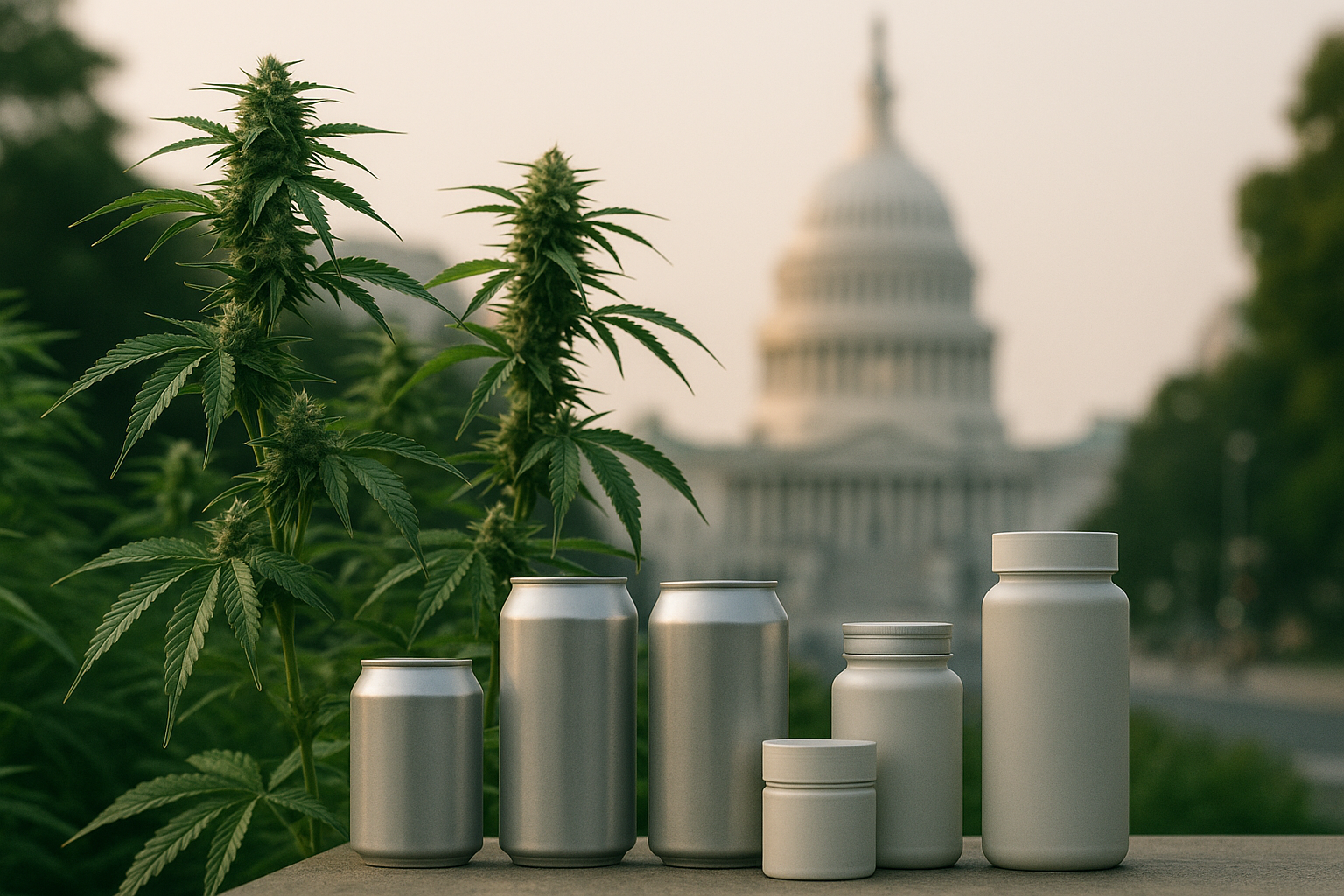
Federal action delivered a temporary reprieve for the hemp-derived cannabinoid market, while a major cannabis takeover battle escalated and California highlighted the scale of its regulated market. Together, the developments underscore an industry increasingly shaped by regulatory deadlines, consolidation pressure and competition with illicit operators.
Trump Signs One-Month Reprieve for Hemp-Derived Cannabinoid Market
President Donald Trump signed H.R. 6500, the Continuing Appropriations and Extensions Act, 2027, on September 2. The law delays most federal restrictions on hemp-derived cannabinoid products from November 12 until December 11, 2026.
The measure gives hemp farmers, manufacturers, beverage companies and retailers roughly one additional month to seek a longer-term regulatory framework. It does not resolve the underlying dispute over whether intoxicating hemp products should be regulated through age limits, testing and packaging standards or removed from much of the commercial market.
The extension was attached to legislation funding federal agencies through December 11. The House approved the measure 370-48 after the Senate passed it 90-6 in August.
Why It Matters: Analysis: The extension reduces the immediate risk of widespread inventory disruptions but leaves businesses facing substantial year-end uncertainty. The December deadline creates a narrow window for Congress to negotiate a durable policy before manufacturers and retailers must make production, distribution and compliance decisions.
Source: The White House; U.S. Government Publishing Office
Aurora Cannabis Board Rejects Curaleaf’s Hostile Takeover Bid
Aurora Cannabis’ board unanimously recommended that shareholders reject Curaleaf Holdings’ unsolicited takeover offer, telling investors not to tender their shares and advising those who already accepted the offer to withdraw them.
Curaleaf is offering 0.3463 of a Curaleaf subordinate voting share plus US$0.75 in cash for each Aurora share, initially representing an implied value of approximately US$4 per share. Aurora argued that the offer undervalues its international medical cannabis platform and would leave its investors with limited voting influence in the combined company.
Aurora also emphasized that it was debt-free and held approximately $149 million in cash as of June 30, while characterizing Curaleaf as carrying more than $1 billion in debt. Curaleaf responded that its proposal provides Aurora shareholders with a stronger route to value creation and criticized Aurora’s history of equity issuance and shareholder dilution.
Why It Matters: Analysis: The dispute is a significant test of consolidation strategy in the global cannabis sector. Curaleaf could improve or extend its offer, Aurora could pursue an alternative transaction, or shareholders could determine that Aurora’s international medical business is more valuable as an independent company.
Source: Aurora Cannabis SEC Filing; Curaleaf Holdings
California Reports $8.4 Billion in Cannabis Taxes and Major Illicit-Market Seizure
California’s regulated cannabis market has generated nearly $8.4 billion in tax revenue since 2018, according to figures released by Governor Gavin Newsom’s office. That total includes nearly $4.5 billion in cannabis excise taxes and almost $3.4 billion in sales taxes.
Retailers remitted $261.7 million in cannabis excise and sales taxes during the second quarter of 2026. The revenue supports programs including childcare, youth substance-use prevention, medical research and environmental recovery.
The state also disclosed that inspectors took possession of approximately $13.3 million in illicit cannabis and tobacco products from an unlicensed Los Angeles County warehouse in August. The inventory included more than 280,000 illegally labeled cannabis packages, over 107,000 packages of edibles and more than 84,000 THC vape pens.
Why It Matters: Analysis: The figures demonstrate both the fiscal importance of California’s licensed market and the continuing competitive burden created by unlicensed supply. Enforcement against large distribution and packaging operations may offer more protection to compliant businesses than isolated retail actions, particularly in the Los Angeles market.
Source: Office of Governor Gavin Newsom
What We’re Watching
Over the next 24 to 72 hours, watch for details on congressional negotiations over a permanent hemp framework, further filings or revised terms in the Curaleaf-Aurora takeover battle, and additional California enforcement disclosures affecting licensed operators and unregulated product distribution.