
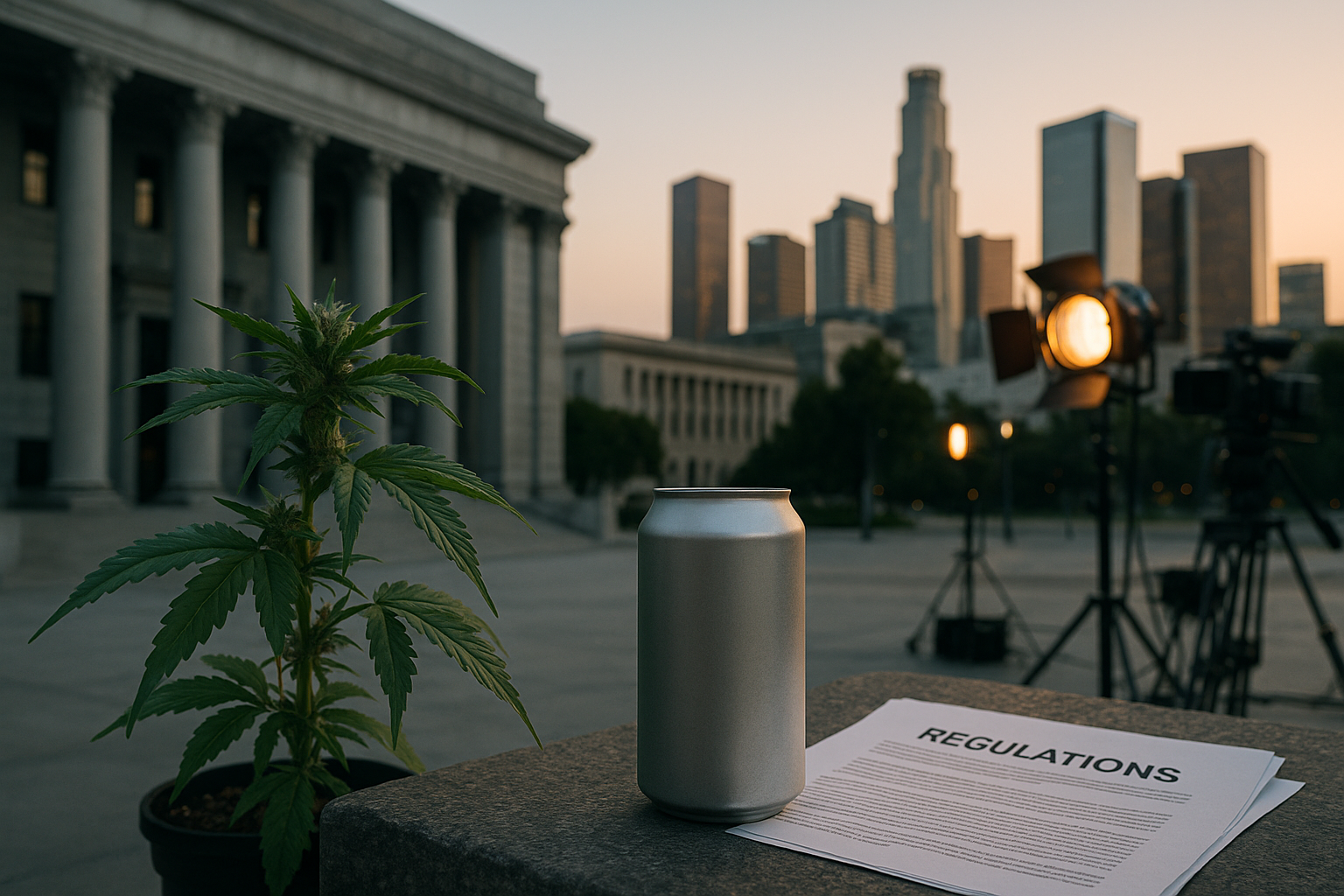
Legal and regulatory risk leads today’s brief, with an appellate ruling tightening Ohio’s intoxicating-hemp market and federal prosecutors alleging corruption inside Atlantic City’s cannabis licensing system. In entertainment business news, a bipartisan coalition introduced a potentially consequential federal production tax credit aimed at keeping film and television work in the United States.
Sixth Circuit Reinstates Ohio Licensing Barriers for Hemp Sellers
The U.S. Court of Appeals for the Sixth Circuit narrowed a preliminary injunction that had allowed several hemp-product companies to operate outside Ohio’s marijuana licensing system. Companies selling hemp-derived drinks and other intoxicating products must now obtain approval from state cannabis authorities before selling in Ohio.
The court found problems with provisions that favored businesses operating within Ohio, holding that the state cannot deny market access based on geography. However, it rejected the broader relief previously granted by the district court, which had effectively allowed the plaintiffs and sellers of their products to bypass the state licensing framework while litigation continued.
Why It Matters: Analysis: The ruling gives Ohio greater authority to channel intoxicating hemp products through its regulated marijuana market while preserving a constitutional challenge to restrictions that discriminate against out-of-state businesses. Hemp beverage manufacturers, distributors and retailers may need to suspend sales or restructure their Ohio operations as the appeal proceeds.
Source: Bloomberg Law
Atlantic City Cannabis Official Charged in Alleged Bribery Scheme
Federal prosecutors charged Atlantic City Director of Constituent Services Kashawn McKinley with honest-services fraud and two counts of soliciting bribes. The charges allege that McKinley sought more than $20,000 in cash and cannabis from a dispensary owner in exchange for assistance opening the business and resolving municipal fee disputes.
Prosecutors allege that McKinley helped reclassify the dispensary as a microbusiness, reducing its annual mercantile license fee from $25,000 to $2,500. The complaint also alleges that he directed the business owner to arrange an assault in exchange for official assistance. Atlantic City subsequently suspended McKinley without pay, according to local reporting. The charges are accusations, and he is presumed innocent unless proven guilty.
Why It Matters: Analysis: The case raises broader governance and due-diligence concerns for operators navigating municipal cannabis approvals. It may prompt reviews of Atlantic City licensing decisions, fee classifications and communications between public officials and dispensary applicants.
Source: U.S. Attorney’s Office for the District of New Jersey
Bipartisan Bill Proposes Federal Film and Television Tax Credit
Lawmakers in the House and Senate introduced the Motion Picture, Television, and Entertainment Revitalization Act, which would establish a 20% federal tax credit based on qualified U.S. labor costs. Eligible productions would generally need at least $1 million in spending and at least 75% of principal photography days in the United States.
Bonus provisions could raise the credit to as much as 30% for qualifying independent productions, projects working in rural opportunity zones or disaster areas, productions operating across multiple states and companies demonstrating measurable onshoring. The proposal also covers qualifying post-production and visual-effects work performed primarily in the United States and is backed by major entertainment unions, guilds and industry groups.
Why It Matters: Analysis: Because the proposed federal credit could be combined with state incentives, it could materially change production-location economics. Los Angeles may benefit from its workforce and infrastructure, although California would still compete with other established production centers for projects receiving the nationwide subsidy.
Source: Office of U.S. Senator Adam Schiff
What We’re Watching
Over the next 24 to 72 hours, watch for guidance from Ohio regulators and hemp companies following the Sixth Circuit order, any review of Atlantic City cannabis licenses connected to the alleged bribery scheme, and additional congressional sponsors or committee action on the federal film production incentive.